Key Takeaways
- GLP-1 receptor agonists are a class of medications that aid in weight loss by mimicking the effects of the natural hormone GLP-1, which helps regulate appetite and food intake.
- These peptides work by increasing insulin secretion, slowing down gastric emptying, and signaling to the brain to reduce hunger and cravings.
- Clinical trials have shown significant weight loss results with GLP-1 peptides like semaglutide, tirzepatide, and retatrutide, but they also come with potential side effects, primarily gastrointestinal issues.
- While highly effective for many, GLP-1 peptides are not suitable for everyone and should be used under the guidance of a healthcare professional.
The Rise of GLP-1 Peptides in Weight Management
The quest for effective and sustainable weight loss solutions has led to significant advancements in medical science, with GLP-1 (glucagon-like peptide-1) receptor agonists emerging as a groundbreaking development. Originally developed for managing type 2 diabetes, these medications have demonstrated remarkable efficacy in promoting weight loss, capturing the attention of both the medical community and the public. Drugs like Ozempic and Wegovy, which contain the active ingredient Semaglutide, have become household names, synonymous with a new era in obesity treatment.
This article delves into the science behind how GLP-1 peptides work for weight loss, exploring their mechanism of action, the results of clinical trials, and the potential risks and side effects. We will also compare the leading GLP-1 peptides—semaglutide, Tirzepatide, and the up-and-coming Retatrutide—and discuss important considerations such as muscle mass preservation and who is a suitable candidate for this type of therapy.
How GLP-1 Peptides Work: The Mechanism of Action
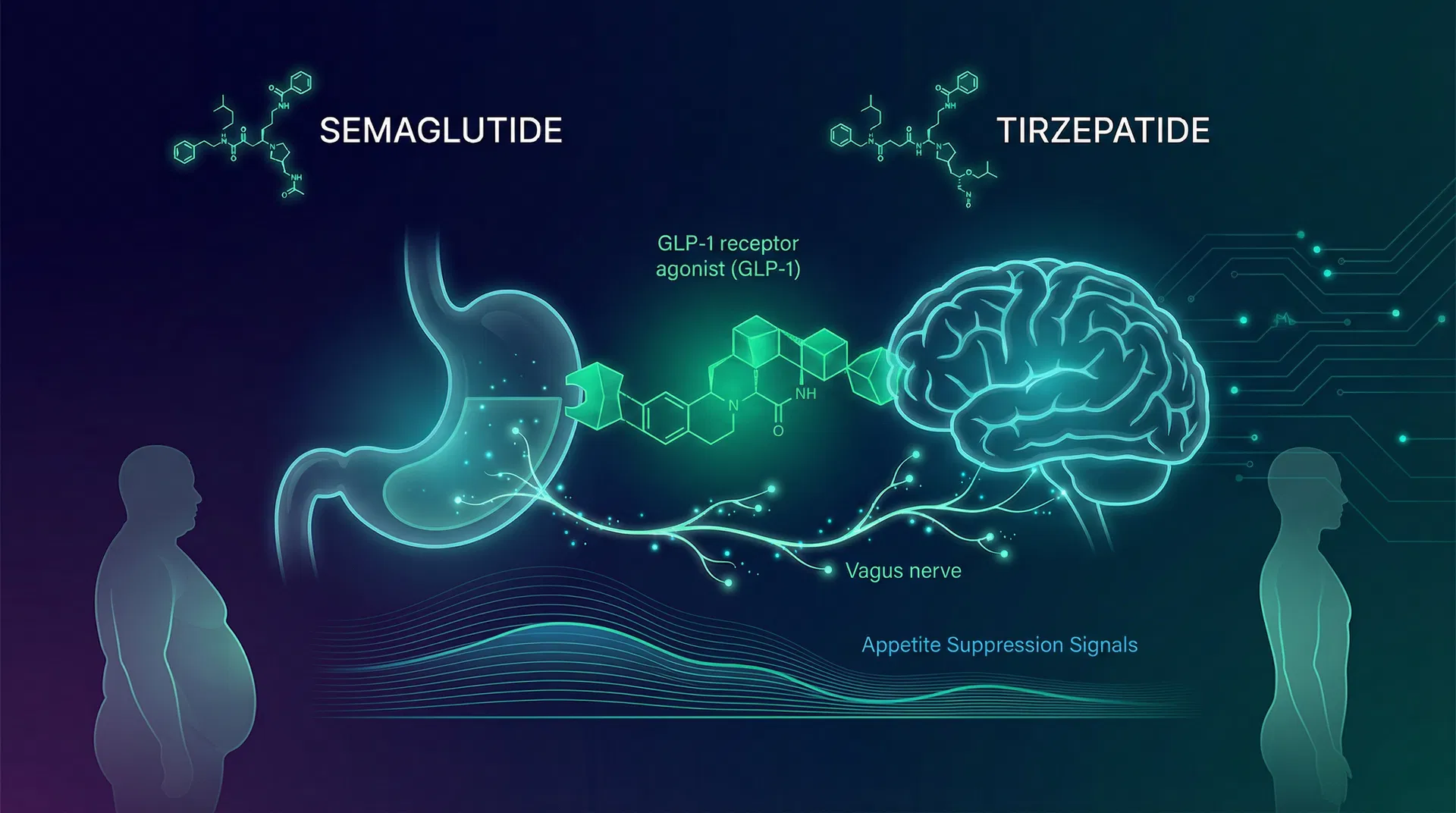
GLP-1 receptor agonists work by mimicking the function of the natural incretin hormone GLP-1, which is produced in the gut in response to food intake. Incretins play a crucial role in glucose metabolism and appetite regulation. GLP-1 receptor agonists bind to and activate GLP-1 receptors, triggering a cascade of effects that lead to weight loss. Collins et al., 2024
The Incretin Effect and Glucose Control
One of the primary functions of GLP-1 is to enhance the 'incretin effect,' which is the phenomenon where oral glucose elicits a much higher insulin response compared to intravenous glucose. By stimulating insulin secretion from the pancreas in a glucose-dependent manner, GLP-1 helps lower blood sugar levels after meals. This is particularly beneficial for individuals with insulin resistance or type 2 diabetes, but it also plays a role in weight management by improving overall metabolic health.
Appetite Suppression and Satiety
GLP-1 peptides have a profound impact on appetite and food cravings. They act on the hypothalamus, the brain's appetite control center, to increase feelings of fullness (satiety) and reduce hunger. This leads to a natural reduction in calorie intake, as individuals feel satisfied with smaller portions and experience fewer cravings for high-calorie foods. This central nervous system effect is a key driver of the weight loss seen with GLP-1 therapies. The complex interplay between the gut and the brain, often referred to as the 'gut-brain axis,' is fundamental to how these peptides regulate energy balance. By activating specific neurons in the hypothalamus, GLP-1s essentially recalibrate the body's set point for weight, making it easier to lose weight and maintain that loss over time.
Delayed Gastric Emptying
Another important mechanism is the slowing of gastric emptying. GLP-1 peptides delay the rate at which food leaves the stomach, which contributes to a prolonged feeling of fullness after meals. This not only helps in reducing the quantity of food consumed in one sitting but also extends the time between meals, further contributing to a caloric deficit and subsequent weight loss. It's important to note that this effect is also what can cause some of the initial gastrointestinal side effects like nausea and a feeling of being overly full, which usually subsides as the body adapts. Filippatos et al., 2015
Clinical Trial Results: Semaglutide, Tirzepatide, and Retatrutide
The effectiveness of GLP-1 peptides for weight loss is supported by extensive clinical trial data. Here's a comparison of the three leading contenders:
Semaglutide (Wegovy/Ozempic)
Semaglutide, marketed as Wegovy for weight management and Ozempic for diabetes, has been a game-changer. In the landmark STEP 1 clinical trial, participants taking a 2.4 mg weekly dose of semaglutide achieved an average weight loss of 14.9% of their body weight over 68 weeks, compared to just 2.4% in the placebo group. A significant portion of participants, over one-third, lost 20% or more of their body weight, a result previously only achievable through bariatric surgery. Wilding et al., 2021
Tirzepatide (Mounjaro/Zepbound)
Tirzepatide, a dual GIP and GLP-1 receptor agonist, has shown even more impressive results. In the SURMOUNT-1 trial, individuals without diabetes taking the highest dose (15 mg) of tirzepatide lost an average of 20.9% of their body weight over 72 weeks. The 10mg and 5mg doses also produced substantial weight loss of 19.5% and 15.0%, respectively. The dual-agonist approach of targeting both GIP and GLP-1 receptors appears to offer a synergistic effect, leading to greater weight loss and improved metabolic parameters compared to GLP-1 agonists alone.
Retatrutide (Experimental)
Retatrutide, a triple-agonist that targets GLP-1, GIP, and glucagon receptors, is still in clinical development but has shown astounding preliminary results. In a Phase 2 trial, participants on the highest dose of retatrutide lost an average of 24.2% of their body weight at 48 weeks, a truly remarkable result for a pharmacotherapy. The weight loss did not appear to have plateaued at the end of the study, suggesting that even greater weight loss could be achieved with longer treatment. This triple-agonist approach, which also targets glucagon receptors, may enhance energy expenditure, further contributing to its potent weight loss effects.
Potential Risks and Common Side Effects
While GLP-1 peptides are highly effective, they are not without risks and side effects. The most common side effects are gastrointestinal in nature and include:
- Nausea
- Vomiting
- Diarrhea
- Constipation
- Abdominal pain
These side effects are typically mild to moderate and tend to decrease over time as the body adjusts to the medication. Starting with a lower dose and gradually titrating up can help mitigate these issues. For more information on potential side effects, you can read our article on compounded semaglutide vs Ozempic.
More serious, but less common, risks include pancreatitis, gallbladder problems, and a potential risk of thyroid C-cell tumors, which has been observed in animal studies. Therefore, individuals with a personal or family history of medullary thyroid carcinoma or Multiple Endocrine Neoplasia syndrome type 2 (MEN 2) should not use GLP-1 receptor agonists.
Muscle Mass Preservation
A concern with any significant weight loss is the potential for loss of lean muscle mass in addition to fat. Some studies have suggested that GLP-1-induced weight loss can lead to a reduction in muscle mass. To counteract this, it is crucial to engage in regular resistance training and ensure adequate protein intake (around 1.2-1.6 grams per kilogram of body weight) while using these medications. This will help preserve metabolically active muscle mass and ensure that the weight lost is primarily from fat stores, leading to a healthier body composition and a better long-term metabolic outcome. Combining GLP-1 therapy with a structured exercise program is the most effective strategy for optimizing results.
Who Should and Shouldn't Use GLP-1 Peptides?
GLP-1 peptides are generally prescribed for adults with a body mass index (BMI) of 30 or greater (obesity), or a BMI of 27 or greater (overweight) with at least one weight-related comorbidity such as high blood pressure, type 2 diabetes, or high cholesterol. They are not intended for cosmetic weight loss in individuals who are not overweight or obese.
Individuals who should not use GLP-1 peptides include those with:
- A personal or family history of medullary thyroid carcinoma (MTC)
- Multiple Endocrine Neoplasia syndrome type 2 (MEN 2)
- A history of pancreatitis
- Severe gastrointestinal disease, such as gastroparesis
- Pregnancy or plans to become pregnant
It is essential to consult with a healthcare professional to determine if GLP-1 therapy is appropriate for you. You can learn more about finding a legitimate provider in our guide on how to find a legitimate peptide provider.
Frequently Asked Questions (FAQs)
1. How long does it take to see results with GLP-1 peptides?
Weight loss with GLP-1 peptides can be seen within the first few weeks of treatment, but the most significant results are typically observed after several months of consistent use, combined with lifestyle modifications.
2. Can I take GLP-1 peptides with other weight loss medications?
It is generally not recommended to use GLP-1 peptides in combination with other weight loss medications unless specifically prescribed and monitored by a healthcare provider.
3. What happens if I stop taking GLP-1 peptides?
If you stop taking GLP-1 peptides, it is likely that you will regain some or all of the weight you lost, as the medication's effects on appetite and satiety will wear off. Maintaining a healthy lifestyle is crucial for long-term weight management.
4. Are there any dietary restrictions while on GLP-1 therapy?
There are no specific dietary restrictions, but to maximize weight loss and minimize side effects, it is advisable to follow a balanced, reduced-calorie diet and avoid high-fat, greasy, or sugary foods.
This article is for educational purposes only and does not constitute medical advice.