What Is LL-37?
LL-37 is the only cathelicidin-derived antimicrobial peptide found in humans. This 37-amino-acid peptide (named for its two leading leucine residues and total length) serves as a critical component of the innate immune system — the body's first line of defense against invading pathogens. Produced by neutrophils, macrophages, epithelial cells, and other immune cells, LL-37 is found throughout the body in areas exposed to potential infection, including the skin, respiratory tract, gastrointestinal tract, and urogenital system [1].
What distinguishes LL-37 from conventional antibiotics is its multi-modal mechanism of action. Rather than targeting a single bacterial process (as most antibiotics do), LL-37 physically disrupts microbial membranes, neutralizes bacterial toxins, prevents biofilm formation, and simultaneously modulates the host immune response. This multi-pronged approach makes it extraordinarily difficult for bacteria to develop resistance — a critical advantage in an era of escalating antibiotic resistance [1].
Mechanism of Action
LL-37 operates through several distinct but complementary mechanisms:
Direct Antimicrobial Activity
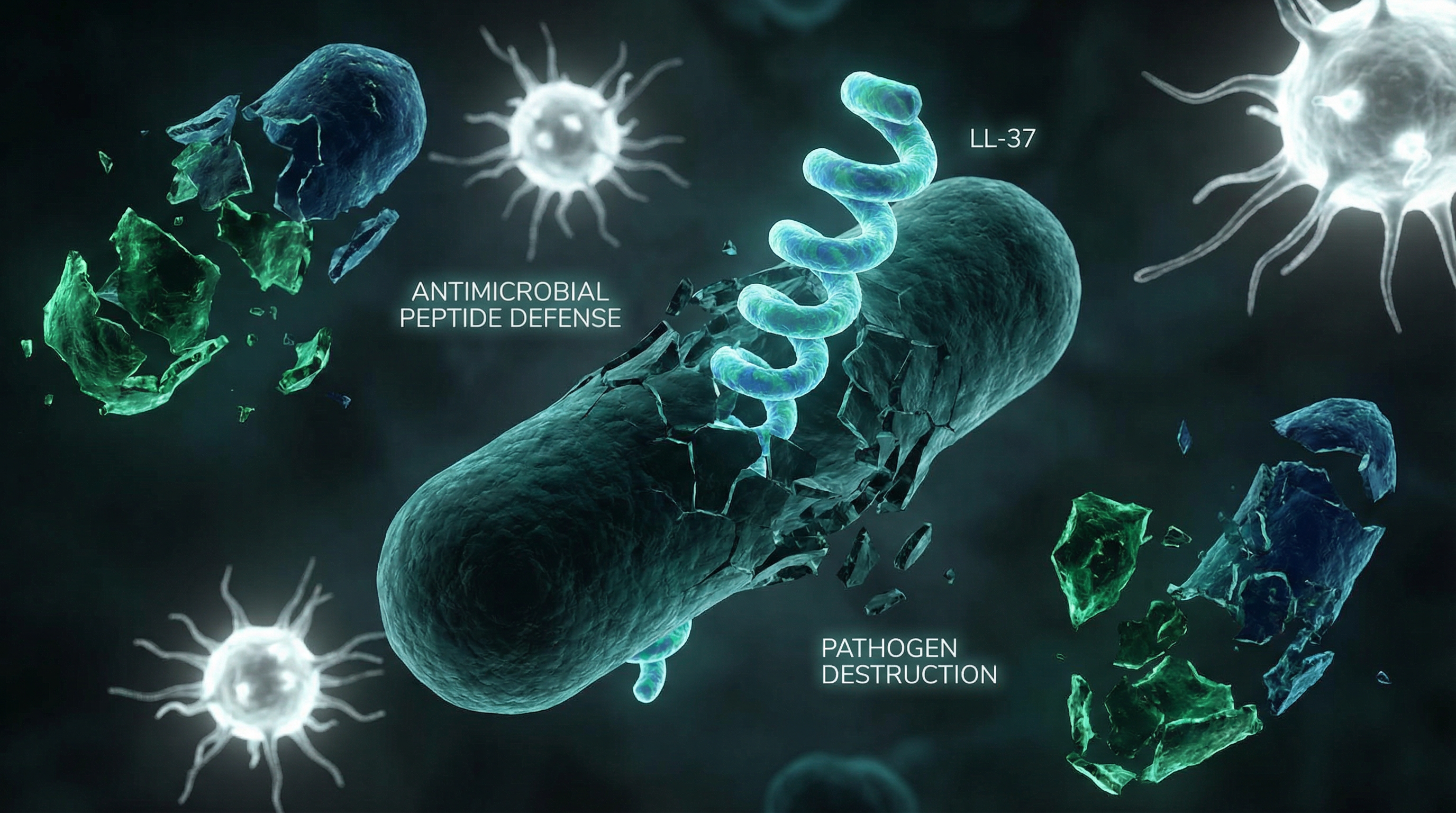
The peptide's amphipathic alpha-helical structure allows it to insert into and disrupt microbial cell membranes. The positively charged residues of LL-37 are attracted to the negatively charged phospholipids on bacterial surfaces, creating pores that lead to rapid cell death. This mechanism is effective against a broad spectrum of pathogens including gram-positive bacteria, gram-negative bacteria, fungi, and enveloped viruses [1].
Anti-Biofilm Properties
One of LL-37's most clinically relevant properties is its ability to prevent and disrupt bacterial biofilms — structured communities of bacteria that are notoriously resistant to conventional antibiotics. Research has shown that LL-37 can inhibit biofilm formation at concentrations well below those needed to kill planktonic (free-floating) bacteria, making it particularly valuable for treating chronic infections [1].
| LL-37 Activity | Mechanism | Clinical Significance |
|---|---|---|
| Membrane Disruption | Pore formation in microbial membranes | Broad-spectrum pathogen killing |
| Anti-Biofilm | Prevents bacterial adhesion and matrix formation | Chronic infection treatment |
| Immunomodulation | Chemokine/cytokine regulation | Balanced immune response |
| Wound Healing | Promotes angiogenesis and re-epithelialization | Accelerated tissue repair |
| Anti-Endotoxin | Neutralizes LPS and bacterial toxins | Reduces sepsis risk |
| Neuroprotection | Inhibits amyloid-beta fibril formation | Potential Alzheimer's application |
Immunomodulatory Functions
Beyond direct pathogen killing, LL-37 serves as a sophisticated immunomodulator. It recruits immune cells to sites of infection, promotes the release of pro-inflammatory cytokines when needed, and can also suppress excessive inflammation to prevent tissue damage. This dual role — promoting and inhibiting inflammation as needed — makes LL-37 a key regulator of the immune response [3].
Looking for immune-supportive peptide therapy [blocked]? The physicians at TeleGenix can evaluate your immune health and recommend evidence-based protocols. Book your free consultation.
Clinical Research Highlights
Antimicrobial and Anti-Biofilm Applications
A comprehensive 2021 review in Antibiotics examined LL-37's potential as an alternative to conventional antibiotics. The researchers highlighted its broad-spectrum antibacterial activity and noted that LL-37-derived peptides could be engineered for enhanced potency and stability. The review also discussed strategies to overcome LL-37's limitations, including its susceptibility to proteolytic degradation and potential cytotoxicity at high concentrations [1].
Research into LL-37 derivatives has yielded particularly promising results. A 2024 study identified two LL-37-derived peptides — FK-16 and GF-17 — that demonstrated high efficacy against bacteria associated with orthopedic infections while exhibiting low cytotoxicity. These shorter fragments retain the antimicrobial activity of the parent peptide while offering improved pharmacological properties [2].
Autoimmune Disease and Viral Infections
A 2020 study in Vaccines examined LL-37's immunomodulatory functions in the context of autoimmune diseases and viral infections. The researchers found that LL-37 can influence the progression of conditions like psoriasis, lupus, and rheumatoid arthritis through its effects on dendritic cells and T-cell responses. Additionally, LL-37 has demonstrated antiviral activity against influenza, HIV, and respiratory syncytial virus [4].
Neuroprotective Potential
Perhaps the most surprising area of LL-37 research is its potential role in neurodegenerative disease. A study published in the Journal of Alzheimer's Disease provided evidence that LL-37 can bind to amyloid-beta peptides, inhibit their aggregation into neurotoxic fibrils, and reduce neuronal damage. This suggests that LL-37 or its derivatives could potentially be developed as therapeutic agents for Alzheimer's disease [5].
LL-37 vs. Other Immune Peptides
| Feature | LL-37 | BPC-157 [blocked]-complete-healing-peptide-guide) | Thymosin Alpha-1 [blocked] | KPV [blocked] |
|---|---|---|---|---|
| Primary Function | Antimicrobial defense | Tissue repair | Immune modulation | Anti-inflammatory |
| Mechanism | Membrane disruption | Growth factor signaling | T-cell activation | NF-kB inhibition |
| Anti-Biofilm | Strong | Minimal | None | None |
| Wound Healing | Yes | Yes (stronger) | Indirect | Indirect |
| Gut Health | Moderate | Strong | Moderate | Strong |
| FDA Status | Research | Research | Approved (orphan) | Research |
Dosing Protocols Under Investigation
LL-37 is currently in the research phase. The following dosing information is derived from preclinical and early clinical studies:
| Parameter | Research Protocol |
|---|---|
| Typical Research Dose | 50-100 mcg/day (subcutaneous) |
| Cycle Length | 2-4 weeks |
| Administration | Subcutaneous injection |
| Topical Application | 1-5 mcg/mL in wound care formulations |
| Storage | Frozen (-20°C) or lyophilized |
Safety Profile
LL-37 is an endogenous peptide naturally produced by the human body, which provides a baseline expectation of tolerability. However, several considerations apply:
- At high concentrations, LL-37 can exhibit cytotoxicity to host cells
- Overexpression has been linked to inflammatory skin conditions (rosacea, psoriasis)
- Injection site reactions are possible
- No completed human clinical trials for therapeutic peptide administration
- Quality control of synthetic LL-37 is critical due to its complex structure
Interested in immune-optimizing peptide protocols? TeleGenix physicians stay current with the latest peptide research and can help you make informed decisions about your health. Schedule a consultation.
Related Peptides to Explore
- KPV [blocked] — Anti-inflammatory tripeptide for gut healing and IBD
- BPC-157 — Body protection compound for comprehensive tissue repair
- Wolverine Stack [blocked]-dosing-guide) — BPC-157 + TB-500 combination for accelerated healing
- GHK-Cu-copper-peptide-multi-system-repair) — Copper peptide with wound healing and regenerative properties
Key Takeaways
LL-37 represents a fascinating intersection of innate immunity, antimicrobial defense, and regenerative medicine. Its multi-modal mechanism of action — combining direct pathogen killing, biofilm disruption, immune modulation, and wound healing — makes it one of the most versatile peptides under investigation. While clinical applications are still being developed, the growing body of research suggests LL-37 and its derivatives could play a significant role in addressing antibiotic resistance, chronic infections, and potentially even neurodegenerative disease.
Related Comparison: Ozempic vs Mounjaro: Complete Comparison [blocked]
References
- Batoni G, et al. The Potential of Human Peptide LL-37 as an Antimicrobial and Anti-Biofilm Agent. Antibiotics. 2021;10(6):650. PMID: 34072318
- Pennone V, et al. Antimicrobial Properties and Cytotoxicity of LL-37-Derived Synthetic Peptides. Antibiotics. 2024;13(8):764. Full Text
- Yang B, et al. Significance of LL-37 on Immunomodulation and Disease Outcome. BioMed Res Int. 2020. PMID: 32509872
- Pahar B, et al. Immunomodulatory Role of the Antimicrobial LL-37 Peptide in Autoimmune Diseases and Viral Infections. Vaccines. 2020;8(3):517. PMID: 32927756
- De Lorenzi E, et al. Evidence That LL-37 May Be a Binding Partner of Amyloid-beta and Inhibitor of Fibril Assembly. J Alzheimers Dis. 2017;59(4):1213-1226. PMID: 28511520
Disclaimer: This article is for educational purposes only and does not constitute medical advice. LL-37 is a research peptide that has not been approved by the FDA for therapeutic use. Always consult with a qualified healthcare provider before starting any peptide therapy.
Related Reading
Explore more in-depth guides on related topics:
- Selank Peptide: The Anti-Anxiety Peptide Backed by Clinical Trials [blocked]
- GHK-Cu (Copper Peptide): The Multi-System Repair Peptide — From Skin to Gut Healing [blocked]
- BPC-157: The Complete Guide to the Body Protection Compound [blocked]
- Semaglutide for Weight Loss: How GLP-1 Receptor Agonists Are Changing the Game [blocked]
- The Science of Peptides: A Beginner's Guide to Peptide Therapy [blocked]
For a comprehensive overview, see our Complete Guide to Peptide Therapy [blocked].