Peptide therapies represent a frontier in personalized and regenerative medicine, offering targeted support for everything from injury recovery and metabolic health to cognitive enhancement and longevity. These powerful signaling molecules can produce remarkable benefits, but a common misconception is that continuous, uninterrupted use yields the best results. In reality, the opposite is often true. The key to unlocking the sustainable, long-term power of peptides lies in a strategic and often overlooked practice: peptide cycling. Without it, the very pathways these compounds are designed to activate can become unresponsive, leading to diminished returns and potential imbalances. This guide will explore the science of why peptide cycling matters, providing a comprehensive overview of established protocols for different peptide classes and the critical signs that indicate it is time to take a scheduled break.
Why Peptide Cycling is Essential for Long-Term Success
The fundamental principle of peptide cycling is to prevent the body from developing a tolerance to the therapeutic signals being introduced. Just as muscles need rest to grow stronger after exercise, your cellular receptors require periodic breaks to maintain their sensitivity and function optimally. This strategic interruption of peptide administration is crucial for ensuring safety, efficacy, and hormonal equilibrium over the long term.
Receptor Desensitization: When Your Body Stops Listening
Imagine working in a room with a loud, constant hum; eventually, your brain starts to tune it out. This is analogous to what happens to your cells during continuous peptide stimulation, a process known as receptor desensitization or tachyphylaxis. Your cells are covered in receptors that act like locks, and peptides are the keys that fit into them to initiate a specific biological response. When these receptors are perpetually activated by a constant supply of a peptide, the cell adapts by reducing the number of available receptors on its surface or by uncoupling them from their downstream signaling pathways. As a result, the same dose of the peptide produces a progressively weaker effect. Research into various peptide receptors, such as the formyl peptide receptors, has demonstrated that prolonged agonist exposure can lead to persistent desensitization, ultimately diminishing the intended therapeutic benefits Forsman et al., 2013. Cycling peptides—that is, pausing their administration—gives your cells the necessary time to reset and regenerate these receptors, restoring their sensitivity and ensuring the peptide can continue to work effectively.
Protecting the HPA Axis and Hormonal Balance
Beyond the cellular level, peptide cycling is also vital for maintaining the stability of the body’s master regulatory systems, particularly the Hypothalamic-Pituitary-Adrenal (HPA) axis. This intricate network governs your stress response, metabolism, and hormone production. Certain classes of peptides, most notably Growth Hormone Secretagogues (GHS), are designed to interact directly with the pituitary gland. While they are effective at stimulating the body’s own production of growth hormone, their continuous use can potentially suppress the natural signaling cascade. Chronic stimulation can disrupt the delicate feedback loops that keep the HPA axis in balance, which could lead to a dependency on the peptide and a reduction in the body's innate ability to produce these hormones. Studies have shown that sustained elevation of certain hormones can suppress peptide and peptide receptor expression within the HPA axis Szot et al., 2004. By implementing planned "off-cycles," you allow the HPA axis to recover and function without external influence, preserving your natural hormonal architecture and preventing the risk of induced suppression.
The Anatomy of a Peptide Cycle: On-Time vs. Off-Time
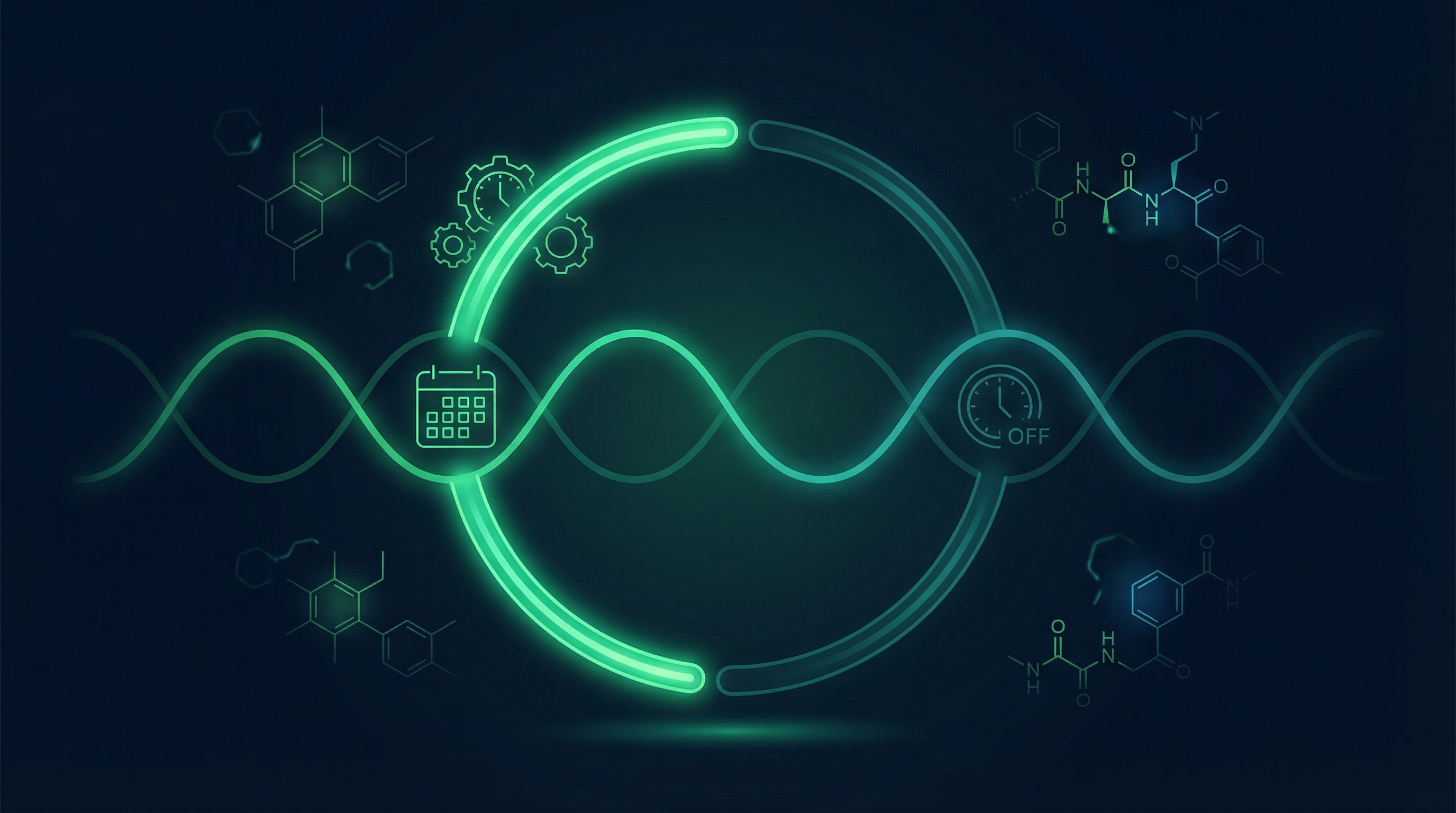
A peptide cycle is defined by two distinct periods: the "on-cycle," when the peptide is actively administered, and the "off-cycle," a designated rest period. The duration and structure of these phases are tailored to the specific peptide, its mechanism of action, and the individual's therapeutic goals. Mastering this rhythm is key to achieving sustainable results.
The "5-on, 2-off" Protocol: A Common Weekly Rhythm
For many peptides that are administered daily, such as BPC-157 and some growth hormone secretagogues, a popular intra-cycle strategy is the "5 days on, 2 days off" protocol. This typically involves administering the peptide from Monday to Friday and then taking a break over the weekend. The rationale behind this approach is to provide consistent therapeutic stimulation during the week to drive repair, recovery, or metabolic processes, while the two-day break offers a brief respite for cellular receptors. This short pause helps mitigate the onset of receptor desensitization without interrupting the overall momentum of the treatment, mirroring a natural rhythm of activity and rest.
Strategic "Off-Cycles": Giving Your Body a Full Reset
While the "5-on, 2-off" approach helps maintain sensitivity during a cycle, a complete "off-cycle" is essential for a full system reset. This involves a much longer break—typically lasting several weeks to a month or more—after completing a full on-cycle (e.g., 12 weeks of active use). This extended rest period is critical for allowing receptors to fully regenerate and for the body’s natural hormonal pathways, like the HPA axis, to recalibrate without any external influence. This not only restores the peptide's efficacy for subsequent cycles but also serves as a valuable "washout" period, allowing both the user and their clinician to assess the true, lasting benefits of the therapy and to determine if another cycle is warranted.
Peptide Cycling Protocols: A Practical Guide
Different classes of peptides interact with the body in unique ways, necessitating distinct cycling strategies. The following protocols are based on common clinical practice and research, but it is imperative to consult with a qualified healthcare professional to develop a plan tailored to your specific needs and health status.
Healing and Repair Peptides (e.g., BPC-157)
BPC-157 is a versatile peptide renowned for its systemic healing properties, particularly for tissue, tendon, and gut repair. Its cycling protocol often depends on the therapeutic goal. For acute injuries, such as a muscle tear or ligament sprain, a shorter, more focused cycle of 4 to 8 weeks is common, often using subcutaneous injections near the site of injury. For more systemic applications, like improving gut health or addressing chronic inflammation, a longer cycle of 8 to 12 weeks of oral or subcutaneous administration is typical. Following the on-cycle, a rest period of at least 4 weeks is recommended to ensure the body fully resets. A narrative review of BPC-157 for musculoskeletal healing notes that most animal studies use daily administration for periods ranging from a single dose to several weeks, highlighting the need for more human research to establish definitive protocols McGuire et al., 2025.
Growth Hormone Secretagogues (GHS)
This class of peptides, which includes Growth Hormone-Releasing Hormones (GHRH) like CJC-1295 and Growth Hormone-Releasing Peptides (GHRP) like Ipamorelin, is designed to stimulate the pituitary gland to release more growth hormone. They are most effective when used in combination. Due to their direct influence on the HPA axis, proper cycling is critical. A standard on-cycle for a GHS stack like CJC-1295 and Ipamorelin is typically 12 to 16 weeks. This is followed by a mandatory and substantial off-cycle of at least 4 to 8 weeks to allow the pituitary to regain its natural sensitivity and function without stimulation. The prolonged administration of some GHS has been shown to potentially lead to tachyphylaxis, further underscoring the importance of cycling Lee et al., 1998.
GLP-1 Receptor Agonists (e.g., Semaglutide, Tirzepatide)
Unlike the peptides above, GLP-1 receptor agonists used for metabolic health and weight management, such as Semaglutide and Tirzepatide, are generally considered long-term therapies rather than compounds to be "cycled" in the traditional sense. For these medications, "cycling" is more about dose titration and maintenance. Treatment typically begins with a low starting dose that is gradually increased over several months to manage gastrointestinal side effects and find the lowest effective maintenance dose. While some clinicians may explore periodic breaks or dose reductions for long-term patients, this should only be done under strict medical supervision, as discontinuing these medications often leads to the reversal of their metabolic benefits. The FDA has approved these medications for chronic weight management, but specific cycling protocols are not part of the official guidelines FDA.gov, 2023.
Comparative Peptide Cycle Overview
To provide a clear summary, the table below outlines the typical cycling strategies for the major peptide categories discussed.
| Peptide Class | Common Examples | Typical On-Cycle Length | Typical Off-Cycle Length | Primary Goal of Cycling |
|---|---|---|---|---|
| Healing & Repair | BPC-157, TB-500 | 4–12 Weeks | 4+ Weeks | Prevent receptor fatigue, assess healing progress. |
| Growth Hormone Secretagogues | CJC-1295, Ipamorelin, Tesamorelin | 12–16 Weeks | 4–8 Weeks | Restore pituitary sensitivity, protect HPA axis function. |
| GLP-1 Receptor Agonists | Semaglutide, Tirzepatide | Long-Term Therapy | Medically Supervised Breaks Only | Manage side effects, establish long-term maintenance dose. |
Signs You Need a Break: Listening to Your Body
Beyond following a pre-planned schedule, it is crucial to pay attention to your body's feedback. Your physiological response is the ultimate indicator of whether a protocol is working or if it’s time for a break. The most common signs that you may be developing a tolerance or require a rest period include:
- Diminishing Returns: This is the most straightforward sign. The benefits you initially experienced—such as improved recovery, deeper sleep, or better energy levels—begin to fade, even though your dose has remained consistent.
- New or Worsening Side Effects: The onset of new or intensified side effects, such as persistent fatigue, headaches, water retention, or numbness in the hands and feet (a common sign of elevated GH levels), can be a clear signal that your body is being overstimulated and needs a break.
- Plateau in Progress: If your progress toward your goals—be it fat loss, muscle gain, or pain reduction—has completely stalled for several weeks despite consistent diet and exercise, it may indicate that the peptide is no longer effective and a cycle break is needed to restore its efficacy.
If you experience any of these signs, it is essential to discuss them with your healthcare provider. They can help you interpret these signals and determine if it is time to begin your off-cycle or adjust your protocol.
What to Discuss with Your Doctor
Before beginning any peptide therapy, a thorough discussion with a qualified healthcare provider is essential. Here are some key points to cover:
- Your Health Goals: Clearly articulate what you hope to achieve with peptide therapy, whether it's injury recovery, improved body composition, or enhanced wellness.
- Your Medical History: Disclose your full medical history, including any pre-existing conditions, allergies, and medications you are currently taking.
- Potential Risks and Benefits: Have an open conversation about the potential risks and benefits of the specific peptide you are considering, as well as the importance of sourcing from a reputable compounding pharmacy.
- Dosing and Cycling Protocol: Work with your doctor to establish a clear dosing and cycling protocol tailored to your individual needs. This should include the on-cycle duration, the off-cycle duration, and the specific dosage.
- Monitoring and Follow-up: Discuss how you will monitor your progress and any potential side effects. This may involve regular check-ins, blood work, or other diagnostic tests.
Medical Disclaimer
The information provided in this article is for educational and informational purposes only and does not constitute medical advice. Peptide therapy should only be pursued under the guidance of a qualified healthcare professional who can properly assess your health status, diagnose conditions, and prescribe a safe and effective treatment plan. Do not self-administer peptides or alter your protocol without consulting your doctor. The U.S. Food and Drug Administration (FDA) has not approved many of these peptides for human use, and their long-term safety and efficacy have not been fully established.