TRT Protocols: A Deep Dive into Cypionate, Enanthate, Gels, and Pellets
What It Is
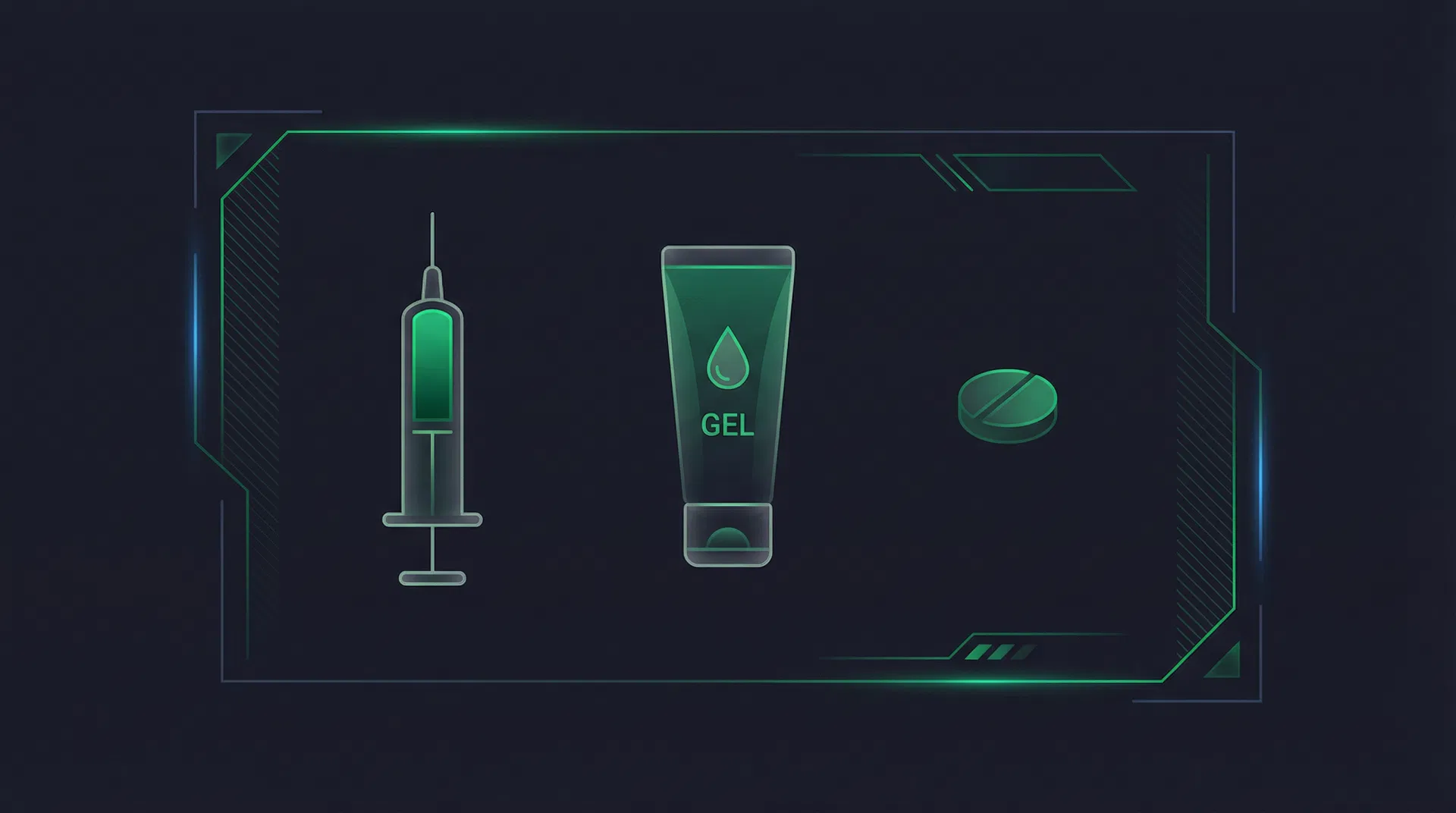
Testosterone Replacement Therapy (TRT) is a medical treatment designed to restore testosterone levels in men with clinically diagnosed hypogonadism—a condition where the body does not produce enough testosterone. The primary goal of TRT is to bring serum testosterone concentrations back to a normal physiological range, typically between 400 and 700 ng/dL, to alleviate symptoms and improve overall health Shoskes et al., 2016. The choice of TRT protocol is a critical decision made between a patient and their healthcare provider, involving various delivery methods, each with unique characteristics. The most common forms include injectable esters like Testosterone Cypionate and Enanthate, transdermal gels, and subcutaneous pellets.
How It Works
The effectiveness of any TRT protocol is determined by its pharmacokinetics—how the drug is absorbed, distributed, metabolized, and excreted. Each delivery method has a distinct pharmacokinetic profile that influences dosing frequency, stability of hormone levels, and user experience.
-
Injectable Esters (Cypionate and Enanthate): Testosterone Cypionate and Enanthate are long-acting esters dissolved in oil, administered via intramuscular (IM) or subcutaneous (SubQ) injection. The ester slows the release of testosterone from the injection site into the bloodstream. Their chemical structures are very similar, and research suggests their pharmacokinetic profiles are nearly identical, with a half-life of about 7-8 days. After an injection, testosterone levels rise, peak within 2-4 days, and then gradually decline until the next dose.
-
Transdermal Gels: Testosterone gels are applied daily to the skin (commonly on the shoulders, upper arms, or abdomen). The hormone is absorbed through the skin and forms a reservoir in the stratum corneum, providing a steady, continuous release into the bloodstream over a 24-hour period. This method more closely mimics the body's natural diurnal testosterone rhythm, avoiding the significant peaks and troughs associated with less frequent injections.
-
Subcutaneous Pellets: Pellets are small, crystalline cylinders of testosterone that are surgically implanted under the skin, usually in the hip or buttock area. They are designed to release testosterone slowly and consistently over a period of 3 to 6 months. This method provides very stable hormone levels, eliminating the need for frequent dosing and the associated fluctuations.
Key Research
Scientific literature provides a wealth of information comparing these delivery methods. A comprehensive review by Shoskes et al. (2016) details the profiles of FDA-approved TRT preparations. It highlights that while injections are effective, they often result in initial supratherapeutic levels followed by a drop to subtherapeutic levels before the next dose, which can cause fluctuations in mood, energy, and libido. Gels, in contrast, provide more stable daily levels but carry a significant risk of transference to partners or children through skin contact.
A study on patient satisfaction by Kovac et al. (2014) found that overall satisfaction rates were high and similar across different TRT modalities: 73% for injections, 68% for gels, and 70% for pellets. The reasons for preference varied significantly. Patients chose injections primarily for their lower cost, while those on pellets prioritized convenience and ease of use. Doctor recommendation was a major factor for patients using gels.
Research by Pastuszak et al. (2015) compared the effects of gels, injections, and pellets on various health markers. The study found that all three modalities were effective in raising testosterone levels but had different impacts on factors like erythrocytosis (increase in red blood cells), with injections showing a higher incidence. Another study by Snyder et al. (2018), part of the landmark Testosterone Trials, demonstrated that TRT improved bone density and corrected anemia in older men with low testosterone.
Finally, a major review on TRT by Bhasin et al. (2018) provides a consensus on best practices, emphasizing individualized treatment and careful monitoring to maximize benefits while minimizing risks.
Benefits
When administered correctly, TRT can offer significant benefits for hypogonadal men, including:
- Improved libido and sexual function
- Increased energy levels and reduced fatigue
- Enhanced mood, concentration, and cognitive function
- Increased muscle mass and decreased fat mass
- Improved bone mineral density
- Potential improvements in insulin sensitivity
Risks & Side Effects
TRT is not without risks, and potential side effects should be carefully considered. Common risks include:
- Erythrocytosis: An increase in red blood cell count, which can thicken the blood and increase the risk of clotting events. This is more common with injectable testosterone.
- Acne and Oily Skin: Testosterone can increase sebum production.
- Benign Prostatic Hyperplasia (BPH): TRT may worsen symptoms in men with pre-existing BPH.
- Gynecomastia: Development of breast tissue can occur due to the conversion of testosterone to estrogen.
- Suppression of Natural Testosterone Production: Exogenous testosterone signals the pituitary gland to stop producing luteinizing hormone (LH), which in turn halts the testes' natural production of testosterone and sperm.
- Delivery-Specific Risks: Gels pose a risk of transference, injections can cause site pain and mood swings, and pellets require a minor surgical procedure with risks of infection or pellet extrusion.
Practical Considerations
Optimizing a TRT protocol is key to achieving the desired therapeutic outcomes while minimizing side effects. A crucial aspect of this is managing injection frequency to maintain steady-state hormone levels.
While manufacturer guidelines for Testosterone Cypionate/Enanthate often suggest injections every 2-4 weeks, this schedule commonly leads to the "peak and trough" effect. Many clinicians now advocate for more frequent injections of smaller doses (e.g., once or twice weekly) to achieve more stable serum testosterone levels. This approach can mitigate the mood and energy fluctuations associated with less frequent dosing and may also reduce the rate of aromatization (conversion to estrogen) and the risk of erythrocytosis.
Achieving a "steady state" means that the amount of testosterone entering the body is equal to the amount being eliminated, resulting in stable blood concentrations. With long-acting esters, this is typically reached after 4-5 half-lives. More frequent injections help maintain this steady state within a tighter therapeutic window, leading to a better patient experience.
The Bottom Line
Choosing a TRT protocol is a highly individualized decision. Injectable esters like Cypionate and Enanthate are cost-effective and proven but may require more frequent dosing to maintain stable levels and avoid side effects. Gels offer the convenience of daily application and stable kinetics but come with the risk of transference. Pellets provide the ultimate convenience with long-lasting, stable levels but involve a minor surgical procedure and higher cost. A thorough discussion with a qualified healthcare provider is essential to weigh the pros and cons of each method and select the protocol that best aligns with the patient's lifestyle, goals, and physiology.
This information is for educational purposes only. Always consult a licensed healthcare provider before starting any hormone therapy protocol.