What It Is
AOD-9604 is a synthetic peptide fragment representing a small portion of the human growth hormone (HGH) molecule. Specifically, it is a modification of the C-terminal fragment of HGH (amino acids 176-191), to which a tyrosine molecule is added at the N-terminus for stabilization. This peptide was initially developed as an anti-obesity drug, as it was found to possess the fat-burning properties of HGH without the unwanted side effects, such as increased insulin-like growth factor 1 (IGF-1) levels, insulin resistance, or negative impacts on blood sugar.
How It Works
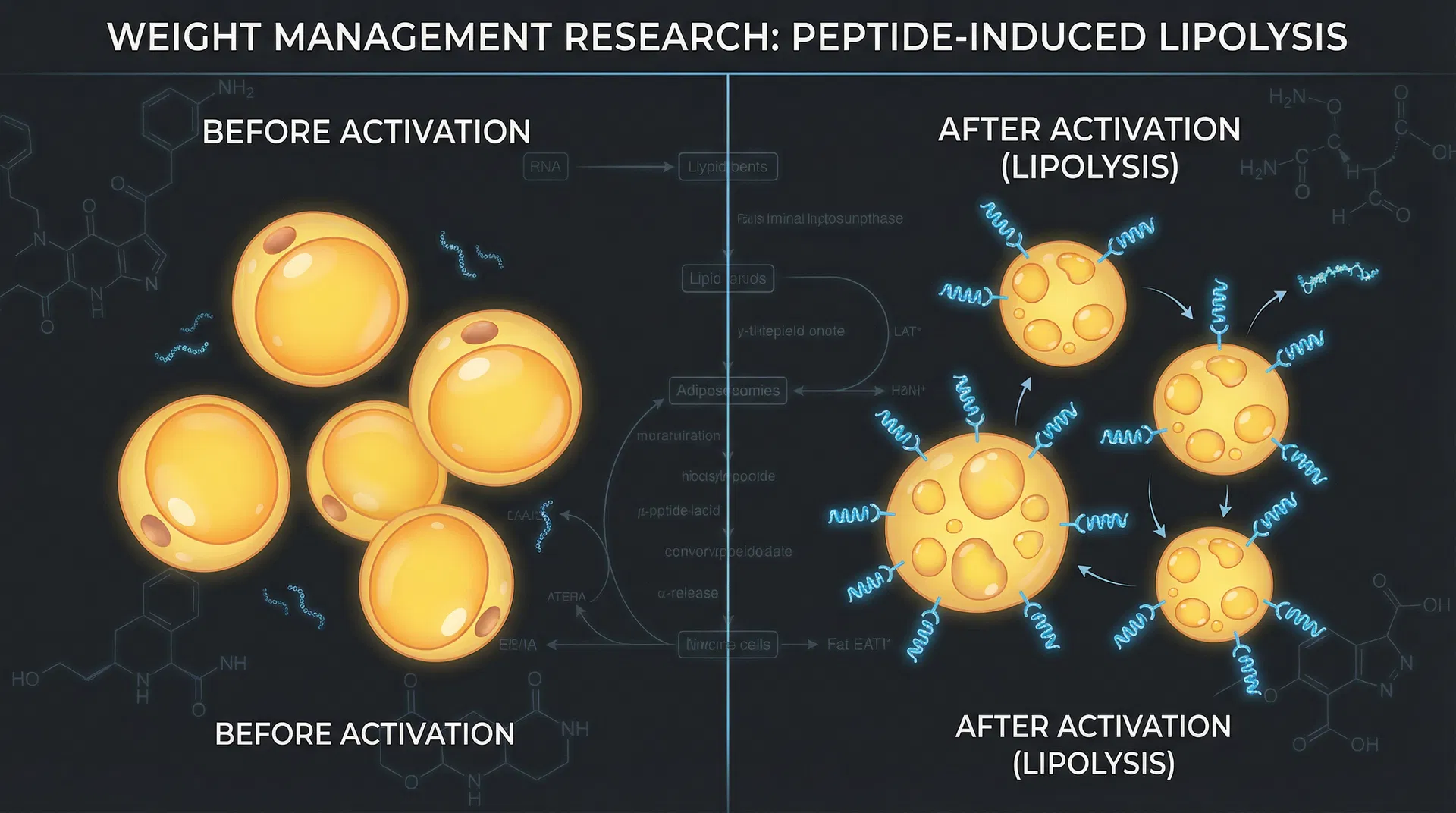
The primary mechanism of action of AOD-9604 is its ability to regulate fat metabolism. Research suggests that it works by stimulating lipolysis (the breakdown of fat) and inhibiting lipogenesis (the conversion of non-fatty food materials into body fat). It mimics the way natural growth hormone regulates fat metabolism but without the adverse effects on blood sugar or growth. AOD-9604 appears to exert its effects through a beta-3 adrenergic pathway, which is the major lipolytic receptor in fat cells. Studies indicate that AOD-9604 can increase the expression of beta-3 adrenergic receptors, thereby enhancing the breakdown of fat.
Want personalized dosing and protocol guidance? The providers at Telegenix specialize in peptide therapy [blocked] and TRT [blocked], designing protocols around your unique labs and health objectives. Get started with a free consultation.
Key Research
Several studies have investigated the effects of AOD-9604 on fat metabolism, weight loss, and safety. Here are some of the key findings:
-
A 2001 study in obese mice demonstrated that chronic administration of AOD-9604 led to a reduction in body weight and body fat. The researchers found that AOD-9604 increased the expression of beta(3)-AR RNA, a key receptor involved in fat breakdown, in fat cells. The study concluded that the lipolytic actions of AOD-9604 are not directly mediated through the beta(3)-AR, but the peptide does increase the expression of these receptors, which may enhance lipolytic sensitivity. Heffernan et al., 2001
-
A 2013 human study summarized the findings of six randomized, double-blind, placebo-controlled trials. The study concluded that AOD-9604 has a very good safety and tolerability profile, indistinguishable from a placebo. It was found to have no adverse effects on IGF-1 levels, insulin resistance, or glucose tolerance. No anti-AOD9604 antibodies were detected, indicating a lack of immunogenicity. Stier et al., 2013
-
A 2000 study on obese Zucker rats found that oral administration of AOD-9604 increased lipolysis and inhibited lipogenesis. The study suggested that AOD-9604 has the potential to be a therapeutic agent for obesity. Ng et al., 2000
-
A 2013 review on obesity pharmacotherapy mentioned a 12-week randomized clinical trial where subjects receiving 1 mg/day of AOD-9604 lost an average of 2.6 kg, compared to 0.8 kg in the placebo group. However, the review also notes that the drug failed to demonstrate efficacy in later phase 2b studies. Misra, 2013
Benefits
Research into AOD-9604 has highlighted several potential benefits, primarily centered around its targeted effects on fat metabolism:
-
Promotes Fat Loss: The most significant purported benefit of AOD-9604 is its ability to stimulate the breakdown of fat and reduce overall body fat. Studies in both animals and humans have shown a reduction in body weight and fat mass with its use.
-
Inhibits Fat Storage: In addition to promoting fat breakdown, AOD-9604 has been shown to inhibit lipogenesis, the process by which the body stores fat.
-
Favorable Safety Profile: Clinical trials have consistently demonstrated that AOD-9604 is well-tolerated, with a safety profile comparable to that of a placebo. It does not appear to cause the adverse effects associated with HGH, such as insulin resistance or an increase in IGF-1 levels.
Risks & Side Effects
While AOD-9604 is generally considered to have a good safety profile, there are some potential risks and side effects to consider:
-
Injection Site Reactions: As with any injectable peptide, there is a risk of localized reactions at the injection site, such as redness, pain, or swelling.
-
Lack of Long-Term Data: While short-term studies have shown a good safety profile, there is a lack of long-term data on the use of AOD-9604.
-
Regulatory Status: It is important to note that AOD-9604 is not an FDA-approved drug for weight loss. The FDA has also expressed concerns about potential immunogenicity with certain administration routes.
-
Efficacy in Later Trials: While early studies were promising, AOD-9604 failed to demonstrate significant efficacy in later-stage clinical trials for weight loss, which led to the discontinuation of its development as a prescription drug.
Practical Considerations
For those exploring the research on AOD-9604, here are some practical points to consider from the scientific literature:
-
Dosage: In clinical trials, a commonly studied dosage was 1 mg per day, administered via subcutaneous injection.
-
Administration: AOD-9604 is typically administered as a subcutaneous injection.
-
Not a Magic Bullet: It is crucial to remember that AOD-9604 is not a standalone solution for weight loss. The most successful outcomes in studies were observed when its use was combined with a healthy diet and regular exercise.
The Bottom Line
AOD-9604 is a fascinating peptide fragment that holds the promise of targeted fat loss without the undesirable side effects of human growth hormone. Early research was encouraging, demonstrating its ability to stimulate fat breakdown and inhibit fat storage, all with a favorable safety profile. However, its failure to produce significant weight loss in later, more extensive clinical trials has tempered initial excitement. While it remains a subject of interest in the research community, it is not an approved medication for weight loss. As with any compound of this nature, it is essential to approach with a critical and informed perspective.
This information is for educational purposes only. Always consult a licensed healthcare provider before starting any peptide or hormone therapy protocol.
From research to results — get expert guidance. Telegenix specializes in physician-supervised peptide therapy and testosterone optimization. Schedule your free consultation and start your personalized protocol.
Related Reading
Explore more in-depth guides on related topics:
- MOTS-c: The Mitochondrial Peptide That Mimics Exercise [blocked]
- Ipamorelin: A Selective Growth Hormone Secretagogue [blocked]
- AOD-9604: What the Science Actually Says — A PubMed-Backed Review [blocked]
- Epithalon: The Anti-Aging Peptide That Activates Telomerase [blocked]
- Dihexa: The Peptide for Cognitive Enhancement and Brain Repair [blocked]
For a comprehensive overview, see our Complete Guide to Peptide Therapy [blocked].
Related Comparison: Tesamorelin vs Ipamorelin: GH Peptide Comparison [blocked]
Related Comparison: MOTS-C vs Metformin: Metabolic Comparison [blocked]
Related Comparison: MK-677 vs HGH: Which Is Better? [blocked]