What It Is
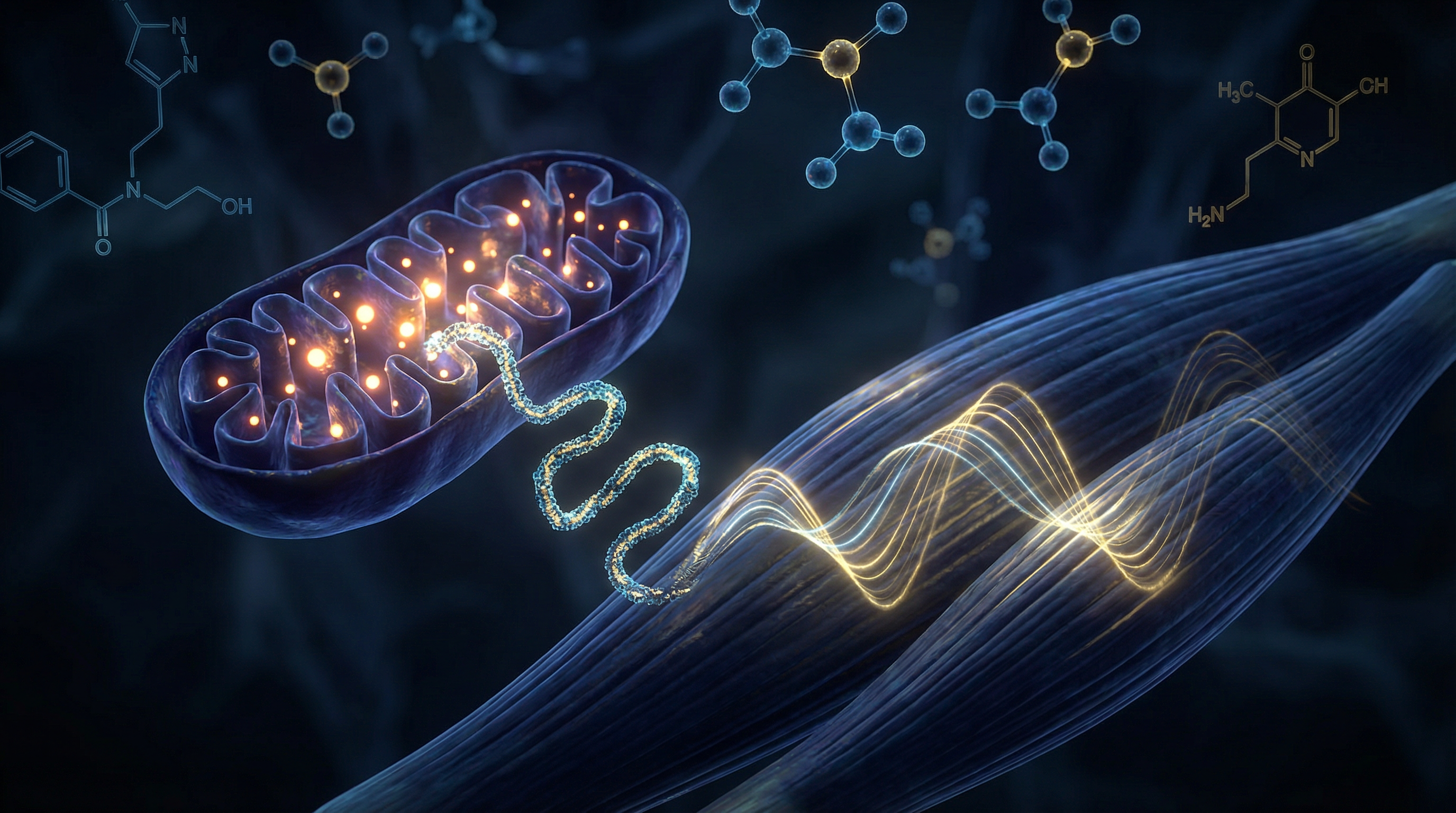
MOTS-c [blocked] (Mitochondrial Open Reading Frame of the 12S rRNA-c) is a naturally occurring peptide consisting of 16 amino acids. Unlike most peptides, which are encoded in the cell's nucleus, MOTS-c is unique because it is encoded in the mitochondrial genome. This distinction is significant because mitochondria are the powerhouses of our cells, responsible for generating the energy needed for life. MOTS-c has gained considerable attention in the scientific community for its role as an "exercise mimetic," meaning it can replicate many of the metabolic and therapeutic benefits of physical exercise.
How It Works
The primary mechanism of action for MOTS-c is its ability to activate the 5' AMP-activated protein kinase (AMPK) pathway. AMPK is a master regulator of cellular energy homeostasis. When activated, it promotes energy-producing processes like glucose uptake and fatty acid oxidation while inhibiting energy-consuming processes. By activating AMPK, MOTS-c effectively mimics the cellular response to exercise. Furthermore, research indicates that MOTS-c can translocate to the nucleus under conditions of metabolic stress, where it can regulate the expression of genes involved in metabolism and cellular defense. This dual action—both within the mitochondria and in the nucleus—allows MOTS-c to exert a wide range of effects on the body.
Need help building the right stack? The clinical team at Telegenix designs personalized peptide and hormone protocols based on your labs, goals, and medical history. Schedule a free consultation.
Key Research
Numerous studies have highlighted the therapeutic potential of MOTS-c. Here are some key findings from the literature:
-
Enhanced Physical Performance: A study published in Nature Communications demonstrated that MOTS-c administration significantly enhanced physical performance in mice of various ages. The researchers found that even late-life treatment with MOTS-c could increase physical capacity and healthspan, suggesting its potential as a therapy for age-related physical decline Reynolds et al., 2021.
-
Metabolic Homeostasis and Insulin Sensitivity: Research in Cell Metabolism revealed that MOTS-c plays a crucial role in metabolic homeostasis. The study showed that MOTS-c treatment in mice prevented both age-dependent and high-fat-diet-induced insulin resistance, as well as diet-induced obesity. These findings underscore the peptide's potential in combating metabolic disorders like type 2 diabetes Lee et al., 2015.
-
Muscle Atrophy and Myostatin Inhibition: A study in the American Journal of Physiology-Endocrinology and Metabolism found that MOTS-c can reduce myostatin, a protein that inhibits muscle growth. By reducing myostatin and other muscle atrophy signaling molecules, MOTS-c may help preserve muscle mass, particularly in the context of metabolic diseases like obesity and type 2 diabetes Kumagai et al., 2021.
-
Regulation of Skeletal Muscle Function: More recent research has shown that MOTS-c directly binds to and regulates the activity of an enzyme called casein kinase 2 (CK2). This interaction is crucial for modulating glucose metabolism and muscle mass, further solidifying the role of MOTS-c as a key regulator of skeletal muscle function.
Benefits
The research-supported benefits of MOTS-c are extensive and primarily revolve around its ability to mimic exercise:
- Improved Insulin Sensitivity: By enhancing glucose uptake in muscle cells, MOTS-c can help the body use insulin more effectively, which is beneficial for individuals with or at risk for type 2 diabetes.
- Enhanced Fat Metabolism: MOTS-c promotes the breakdown of fatty acids for energy, which can contribute to fat loss and a reduction in visceral fat.
- Increased Endurance and Physical Performance: Studies have shown that MOTS-c can improve exercise capacity, allowing for longer and more intense workouts.
- Anti-Aging Effects: By improving mitochondrial function and combating age-related physical decline, MOTS-c may contribute to a longer healthspan.
- Muscle Mass Preservation: Its ability to inhibit myostatin suggests that MOTS-c could help prevent age-related muscle loss (sarcopenia).
Risks & Side Effects
Currently, the available research, primarily from animal studies and early-phase human data, has not reported significant adverse effects from MOTS-c administration. However, it is important to note that the long-term safety profile in humans is still under investigation. As with any peptide, there is a risk of injection site reactions, such as redness or irritation. Some anecdotal reports from online communities mention mild headaches or dizziness, but these are not well-documented in the scientific literature. The U.S. Anti-Doping Agency (USADA) has listed MOTS-c as a prohibited substance, as it is considered an experimental peptide with performance-enhancing effects.
Practical Considerations
In research settings, MOTS-c is typically administered via subcutaneous injection. Dosages in human studies are still being established, but commonly studied dosages in animal models, when translated to humans, range from 5-15 mg per week, often split into multiple injections. The timing of administration may also be a factor, with some protocols suggesting injections in the morning or before exercise to align with the body's natural metabolic rhythms. It is crucial to emphasize that MOTS-c is an investigational peptide and is not approved for human use by the FDA.
The Bottom Line
MOTS-c is a fascinating mitochondrial-derived peptide with significant potential as an exercise mimetic. Its ability to improve metabolism, enhance insulin sensitivity, and boost physical performance makes it a promising area of research for a variety of age-related and metabolic conditions. While the initial findings are encouraging, more research is needed to fully understand its long-term effects and safety in humans.
This information is for educational purposes only. Always consult a licensed healthcare provider before starting any peptide or hormone therapy protocol.
Want to explore this therapy under medical supervision? Telegenix offers telehealth consultations with providers who specialize in peptides and hormone optimization. Book your free consultation today.
Related Reading
Explore more in-depth guides on related topics:
- Epithalon: The Anti-Aging Peptide That Activates Telomerase [blocked]
- Sermorelin: The GH-Releasing Peptide for Vitality & Health [blocked]
- Snap-8: The Anti-Wrinkle Peptide for Smoother Skin [blocked]
- Ipamorelin: A Selective Growth Hormone Secretagogue [blocked]
- AOD-9604: The Fat-Burning Peptide Fragment [blocked]
For a comprehensive overview, see our Complete Guide to Peptide Therapy [blocked].
Related Comparison: Tesamorelin vs Ipamorelin: GH Peptide Comparison [blocked]
Related Comparison: MOTS-C vs Metformin: Metabolic Comparison [blocked]
Related Comparison: Sermorelin vs CJC-1295: Complete Comparison [blocked]