Exploring Peptides for Fat Loss: A Research-Based Overview
The pursuit of effective strategies for fat loss has led to extensive research into various compounds, including a class of signaling molecules known as peptides. These short chains of amino acids play crucial roles in numerous physiological processes, and some have shown promising results in pre-clinical and clinical studies related to metabolic health and body composition.
This article provides an educational overview of several peptides that have been investigated for their potential impact on fat loss, ranked based on the current strength of available research and clinical application. It is important to note that this information is for educational purposes only and should not be interpreted as medical advice or a recommendation for treatment. Always consult with a qualified healthcare professional before considering any new health regimen.
Understanding Peptide Mechanisms in Fat Loss
Peptides can influence fat loss through diverse mechanisms, including:
- Modulating appetite and satiety: Affecting hormones that signal hunger and fullness.
- Increasing energy expenditure: Boosting metabolism or thermogenesis.
- Enhancing fat oxidation: Promoting the breakdown of stored fat for energy.
- Improving insulin sensitivity: Optimizing glucose utilization and reducing fat storage.
- Reducing inflammation: Chronic inflammation can contribute to metabolic dysfunction and weight gain.
Let's delve into the top-researched peptides for fat loss.
1. Semaglutide/Tirzepatide (GLP-1 Receptor Agonists)
Mechanism: Semaglutide [blocked] and Tirzepatide [blocked] are synthetic analogs of glucagon-like peptide-1 (GLP-1), a naturally occurring incretin hormone. They act as GLP-1 receptor agonists, meaning they bind to and activate GLP-1 receptors throughout the body.
- Appetite Suppression: GLP-1 agonists slow gastric emptying, leading to a prolonged feeling of fullness and reduced food intake. They also act on the brain's appetite centers to decrease hunger and cravings.
- Improved Insulin Sensitivity: They stimulate glucose-dependent insulin secretion from the pancreas, helping to lower blood sugar levels.
- Reduced Glucagon Secretion: They suppress glucagon release, further contributing to blood sugar control.
- Tirzepatide's Dual Action: Tirzepatide is unique as it is a dual GLP-1 and glucose-dependent insulinotropic polypeptide (GIP) receptor agonist. GIP also plays a role in glucose metabolism and appetite regulation, potentially offering a more potent effect on weight loss.
Evidence Strength: Very Strong. Both Semaglutide and Tirzepatide have undergone extensive Phase 3 clinical trials and are FDA-approved for weight management in individuals with obesity or overweight with at least one weight-related comorbidity. They have demonstrated significant and sustained weight loss (typically 15-20% of body weight with Tirzepatide and 10-15% with Semaglutide in clinical trials) in these populations.
Expected Results: Significant and sustained body weight reduction, primarily through a decrease in fat mass. Improvements in metabolic parameters like blood glucose, blood pressure, and lipid profiles are also commonly observed.
Considerations: Administered via subcutaneous injection. Common side effects include gastrointestinal issues (nausea, vomiting, diarrhea, constipation), which often subside over time. There are contraindications and potential serious side effects, such as pancreatitis and thyroid C-cell tumors (observed in rodents).
2. Tesamorelin (Growth Hormone-Releasing Hormone Analog)
Looking for a physician-guided approach? Telegenix connects you with licensed providers who specialize in peptide and testosterone optimization. Every protocol is built on your bloodwork. Learn more and book a consultation.
Mechanism: Tesamorelin [blocked] is a synthetic analog of growth hormone-releasing hormone (GHRH). It stimulates the pituitary gland to produce and release endogenous growth hormone (GH). Unlike direct GH administration, Tesamorelin promotes a more physiological, pulsatile release of GH.
- Increased Lipolysis: GH is a potent lipolytic hormone, meaning it promotes the breakdown of triglycerides in fat cells into free fatty acids for energy.
- Reduced Visceral Adiposity: Tesamorelin has been specifically studied and approved for the reduction of excess abdominal fat in HIV-infected patients with lipodystrophy. This type of fat (visceral fat) is particularly associated with metabolic disease.
- Improved Body Composition: By increasing GH levels, Tesamorelin can contribute to increased lean muscle mass and reduced fat mass.
Evidence Strength: Strong. Tesamorelin is FDA-approved for the treatment of HIV-associated lipodystrophy. Numerous clinical trials have demonstrated its efficacy in reducing visceral adipose tissue in this specific population. While not FDA-approved for general weight loss, its mechanism of action and proven efficacy in reducing a particularly problematic type of fat make it a strong contender in fat loss research.
Expected Results: Reduction in visceral fat, improved body composition (increased lean mass, decreased fat mass), and potential improvements in metabolic markers.
Considerations: Administered via subcutaneous injection. Potential side effects include injection site reactions, hypersensitivity reactions, and musculoskeletal pain. It can also slightly increase IGF-1 levels.
3. CJC-1295/Ipamorelin (Growth Hormone Secretagogue Stack)
Mechanism: This combination involves two distinct peptides that work synergistically to enhance endogenous GH production.
- CJC-1295 (with DAC): A GHRH analog that has a longer half-life due to its "Drug Affinity Complex" (DAC) modification. It stimulates the pituitary to release GH, similar to Tesamorelin, but with a more sustained effect.
- Ipamorelin: A growth hormone secretagogue receptor (GHSR) agonist, also known as a ghrelin mimetic. It selectively stimulates the release of GH from the pituitary, but without significantly increasing appetite-stimulating hormones like ghrelin or stress hormones like cortisol, which can be a concern with some other GH secretagogues.
Together, CJC-1295 and Ipamorelin provide a powerful stimulus for natural GH production, leading to:
- Enhanced Lipolysis: Increased GH levels promote the breakdown of fat.
- Improved Muscle Synthesis: GH contributes to muscle growth and repair, which can indirectly aid fat loss by boosting metabolism.
- Metabolic Benefits: Potential improvements in insulin sensitivity and overall metabolic function.
Evidence Strength: Moderate. While individual components have been studied, the combination of CJC-1295 and Ipamorelin has seen extensive use and anecdotal reports in performance and anti-aging communities. Clinical research specifically on this stack for fat loss in healthy individuals is less robust than for FDA-approved drugs but promising. Studies on individual components support their role in GH modulation and body composition.
Expected Results: Reductions in body fat, particularly when combined with exercise and a healthy diet. Potential increases in lean muscle mass, improved recovery, and better sleep quality.
Considerations: Administered via subcutaneous injection. Potential side effects include injection site reactions, headache, and flushing. Long-term safety data for this specific stack in healthy populations is still evolving.
4. AOD-9604 (Growth Hormone Fragment)
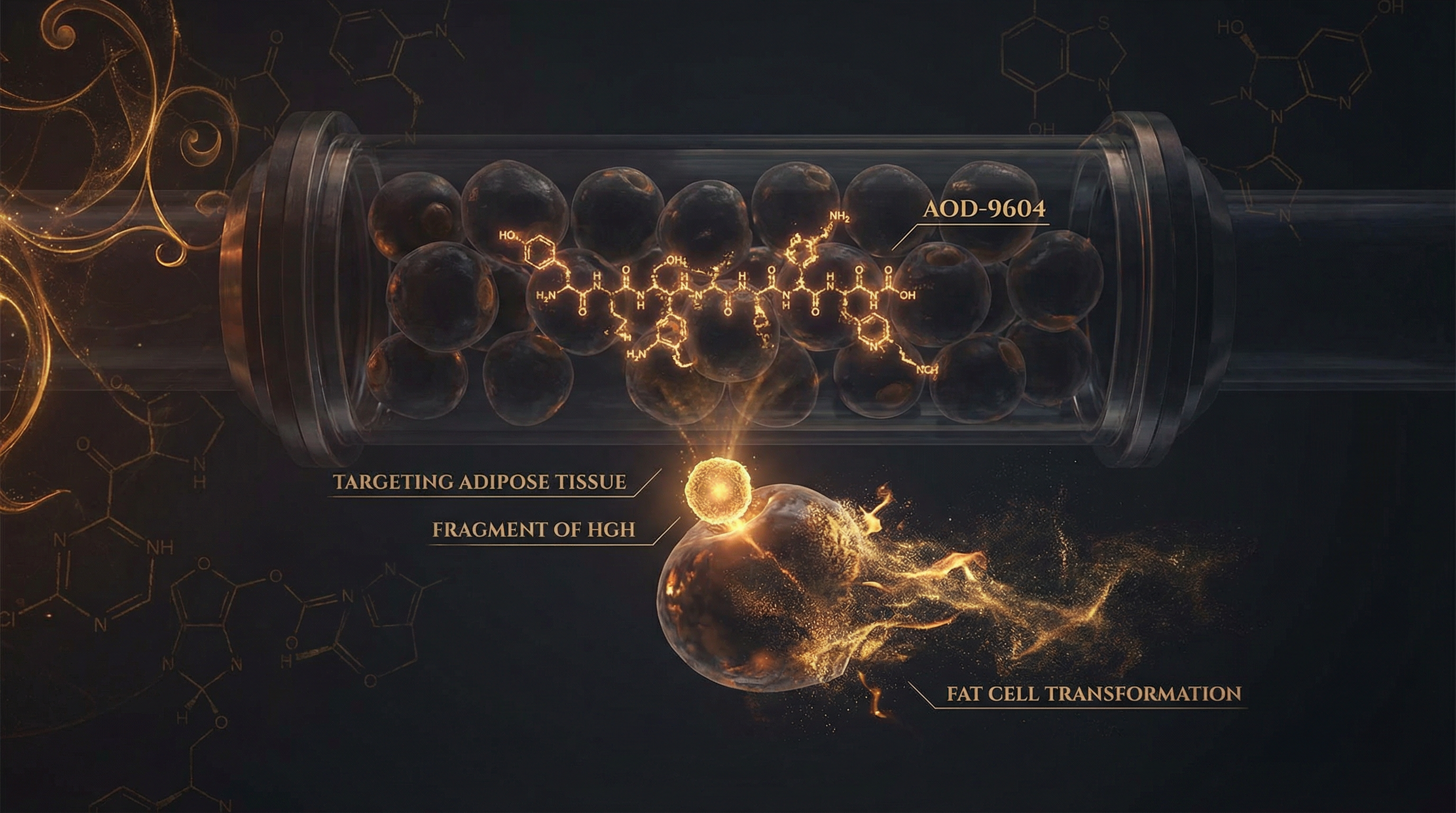
Mechanism: AOD-9604 [blocked] is a synthetic fragment of the human GH molecule, specifically the C-terminal region (amino acids 177-191). Unlike full-length GH, AOD-9604 is designed to retain the fat-mobilizing effects of GH without promoting growth or affecting insulin sensitivity.
- Stimulates Lipolysis: It is believed to directly stimulate the breakdown of stored fat (lipolysis) and inhibit lipogenesis (the formation of new fat).
- No IGF-1 Elevation: A key advantage is its purported lack of impact on IGF-1 levels, which are typically elevated by full-length GH and can have their own set of considerations.
Evidence Strength: Moderate. AOD-9604 has been the subject of several clinical trials for obesity and fat loss. While some early studies showed promise in animal models and in vitro, human clinical trials for obesity did not consistently demonstrate significant weight loss compared to placebo. However, some research suggests it may have a localized fat-reducing effect or contribute to fat oxidation. Its development for obesity was halted, but research continues in other areas like cartilage repair.
Expected Results: Potential localized fat reduction and increased fat oxidation. Less likely to cause significant systemic weight loss compared to GLP-1 agonists.
Considerations: Administered via subcutaneous injection or orally. Generally considered to have a good safety profile in studies conducted. More research is needed to fully understand its efficacy specifically for widespread fat loss in humans.
5. MOTS-c (Mitochondrial Peptide)
Mechanism: MOTS-c [blocked] (Mitochondrial Open Reading Frame of the 12S rRNA Type-c) is a fascinating peptide encoded by mitochondrial DNA. It acts as a mitokine, a signaling molecule that communicates between mitochondria and the rest of the cell, influencing metabolic homeostasis.
- Improved Glucose Metabolism: MOTS-c has been shown to enhance insulin sensitivity and promote glucose uptake in skeletal muscle.
- Increased Fat Oxidation: Pre-clinical studies suggest it can increase fatty acid oxidation in muscle and liver, thus promoting the burning of fat for energy.
- Energy Homeostasis: It plays a role in regulating cellular energy balance and protecting against metabolic stress.
Evidence Strength: Emerging. Research on MOTS-c is primarily in pre-clinical (animal and in vitro) studies. These studies have shown promising results in improving metabolic health, reducing obesity, and
Ready to put this research into practice? Telegenix provides evidence-based peptide and TRT [blocked] protocols supervised by licensed providers. Get a personalized plan built around your bloodwork. Start with a free consultation.
Related Reading
Explore more in-depth guides on related topics:
- Testosterone and Body Composition: How TRT Affects Muscle, Fat, and Strength [blocked]
- Semaglutide for Weight Loss: How GLP-1 Receptor Agonists Are Changing the Game [blocked]
- Retatrutide and Body Composition: Beyond the Scale [blocked]
- AOD-9604: The HGH Fragment for Targeted Fat Loss and Cartilage Repair [blocked]
- BPC-157: The Complete Guide to the Body Protection Compound [blocked]
For a comprehensive overview, see our Complete Guide to Peptide Therapy [blocked].
Related Comparison: Tesamorelin vs Ipamorelin: GH Peptide Comparison [blocked]
Related Comparison: MOTS-C vs Metformin: Metabolic Comparison [blocked]
Related Comparison: Sermorelin vs CJC-1295: Complete Comparison [blocked]