STEP 5: The Longest STEP Trial
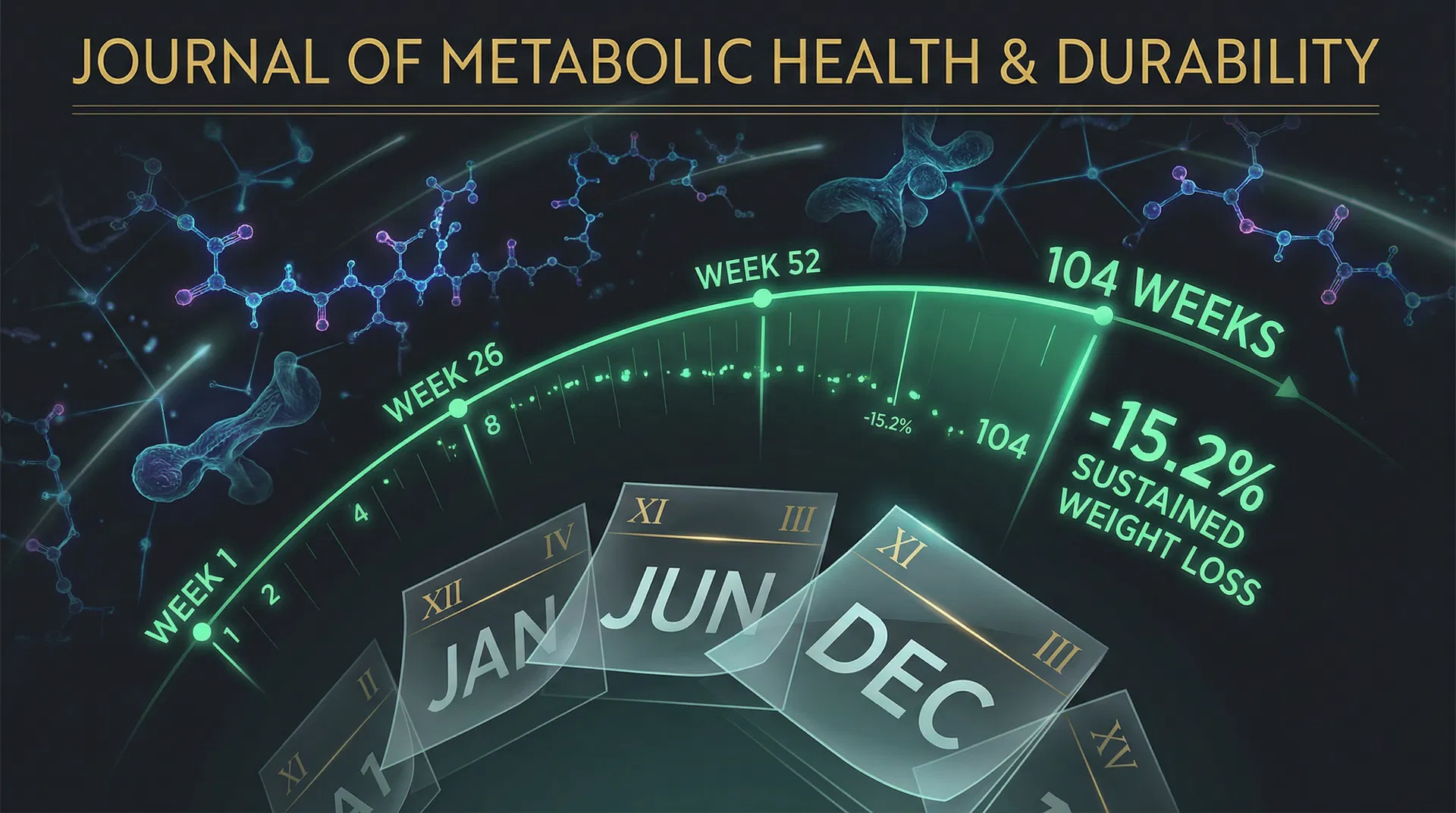
One of the most important questions in obesity pharmacotherapy is whether weight loss medications maintain their effectiveness over time. The STEP 5 trial, published in Nature Medicine in October 2022 by Garvey et al., provided the most comprehensive long-term data for semaglutide [blocked] 2.4 mg, demonstrating sustained efficacy over a full two-year treatment period [1].
Study Design
STEP 5 was a 104-week (2-year), randomized, double-blind, placebo-controlled trial conducted at 41 sites across the United States. The study enrolled 304 adults with obesity (BMI ≥30) or overweight (BMI ≥27) with at least one weight-related comorbidity, without type 2 diabetes.
Participants were randomized 1:1 to receive either semaglutide 2.4 mg or matching placebo via once-weekly subcutaneous injection, alongside lifestyle intervention. The dose was escalated over 16 weeks to the target dose of 2.4 mg weekly.
Considering adding this to your protocol? Telegenix provides physician-supervised peptide and hormone optimization programs tailored to your bloodwork and goals. Schedule your consultation.
Weight Loss Results Over Two Years
The primary endpoint — percentage change in body weight from baseline to week 104 — demonstrated remarkable durability:
Mean Body Weight Change at Week 104:
- Semaglutide: -15.2% (approximately -15.9 kg)
- Placebo: -2.6%
- Treatment difference: -12.6 percentage points (95% CI, -15.3 to -9.8; P<0.001)
Weight Loss Trajectory: The weight loss pattern revealed important insights about semaglutide's long-term pharmacology:
- Weeks 0-60: Progressive weight loss, with the nadir (maximum weight loss) occurring around week 60
- Weeks 60-104: Weight stabilized with a slight plateau, maintaining the vast majority of lost weight
- The mean weight loss at week 68 was -15.8%, and at week 104 was -15.2%, indicating minimal weight regain while on treatment [1].
Categorical Weight Loss at Week 104:
- ≥5% weight loss: 77.1% semaglutide vs. 34.4% placebo
- ≥10% weight loss: 61.8% vs. 13.3%
- ≥15% weight loss: 52.1% vs. 7.0%
- ≥20% weight loss: 36.1% vs. 3.9%
Sustained Cardiometabolic Benefits
STEP 5 demonstrated that the cardiometabolic improvements seen in shorter trials were maintained over two years:
- Waist circumference: -14.4 cm vs. -5.2 cm at week 104
- Systolic blood pressure: Sustained reductions of approximately 5 mmHg
- HbA1c: Maintained improvement, with fewer participants progressing to prediabetes or diabetes
- Lipid profile: Sustained improvements in triglycerides, VLDL, and free fatty acids
- C-reactive protein: Persistent reduction indicating ongoing anti-inflammatory effects
These sustained improvements suggest that continued semaglutide treatment provides ongoing cardiometabolic protection, not just weight loss [1].
Safety Over Two Years
The extended treatment period provided valuable long-term safety data:
- Gastrointestinal events remained the most common adverse effects but were predominantly mild-to-moderate and decreased over time
- Serious adverse events: 15.3% semaglutide vs. 9.3% placebo
- Discontinuation due to adverse events: 5.9% semaglutide vs. 4.6% placebo
- Gallbladder disorders: 3.6% semaglutide vs. 0.7% placebo
- No new safety signals emerged during the extended treatment period
The safety profile over 104 weeks was consistent with the known GLP-1 receptor agonist class effects, with no evidence of increased risk over time [1].
Comparison with Other STEP Trials
STEP 5 results were consistent with, and complementary to, other trials in the STEP program:
| Trial | Duration | Population | Mean Weight Loss |
|---|---|---|---|
| STEP 1 | 68 weeks | Obesity, no T2D | -14.9% |
| STEP 2 | 68 weeks | Obesity + T2D | -9.6% |
| STEP 3 | 68 weeks | Obesity + intensive behavioral therapy | -16.0% |
| STEP 4 | 68 weeks | Withdrawal design | -7.9% continued vs +6.9% switched to placebo |
| STEP 5 | 104 weeks | Obesity, no T2D | -15.2% |
The consistency of ~15% weight loss across STEP 1, 3, and 5 (all in non-diabetic populations) reinforced the reliability of semaglutide's efficacy [2].
Clinical Significance
STEP 5 addressed several critical questions for clinical practice:
-
Durability confirmed: Weight loss with semaglutide is maintained for at least two years with continued treatment, countering concerns about tolerance or tachyphylaxis.
-
No dose escalation needed: The 2.4 mg dose remained effective throughout the study without requiring dose increases.
-
Ongoing treatment paradigm: The results support treating obesity as a chronic disease requiring ongoing pharmacotherapy, similar to hypertension or hyperlipidemia.
-
Quality of life: Patient-reported outcomes showed sustained improvements in physical functioning and weight-related quality of life over the full two years [1].
Limitations
The study was limited by its relatively small sample size (304 participants) compared to STEP 1 (1,961 participants). The study population was predominantly White (75%) and female (78%), which may limit generalizability. Additionally, the trial did not include patients with type 2 diabetes [1].
Related Comparison: Ozempic vs Mounjaro: Complete Comparison [blocked]
References
-
Garvey WT, Batterham RL, Bhatta M, et al. "Two-year effects of semaglutide in adults with overweight or obesity: the STEP 5 trial." Nature Medicine. 2022;28(10):2083-2091. PubMed: 36216945
-
Bergmann NC, Davies MJ, Lingvay I, Knop FK. "Semaglutide for the treatment of overweight and obesity: A review." Diabetes, Obesity and Metabolism. 2023;25(1):18-35. PMC: 10092086
-
Kushner RF, Calanna S, Davies M, et al. "Semaglutide 2.4 mg for the Treatment of Obesity: Key Elements of the STEP Trials 1 to 5." Obesity. 2020;28(6):1050-1061. PubMed: 32441473
Want to explore this therapy under medical supervision? Telegenix offers telehealth consultations with providers who specialize in peptides and hormone optimization. Book your free consultation today.
Related Reading
Explore more in-depth guides on related topics:
- Semaglutide for Weight Loss: How GLP-1 Receptor Agonists Are Changing the Game [blocked]
- Semaglutide: What the Science Actually Says — A PubMed-Backed Review [blocked]
- Retatrutide vs Semaglutide vs Tirzepatide: How They Compare [blocked]
- STEP 1 Trial: How Semaglutide 2.4mg Achieved 15% Weight Loss in Adults [blocked]
- Weight Regain After Stopping Semaglutide: What the STEP Trials Reveal [blocked]
For a comprehensive overview, see our Complete Guide to Peptide Therapy [blocked].